Dressing for an Alta whale boat in the Arctic cold
Alta in winter is cold and dry, and an hour on a moving boat makes it feel far colder. What you need to bring depends a lot on which tour you book, since some lend you a full thermal suit and others lend nothing. This guide covers the layers, the small items people forget, and the kit each tour supplies.
How cold it gets on the Altafjord
Alta sits inland of the outer coast, so its winters are drier and colder than in the island towns. Daytime temperatures in the whale season often hover around −3 to −8 °C (18–27 °F), and clear days are colder still.
On the water the numbers lie. A boat moving at speed adds its own wind. Spray turns gloves wet, and you stand still for long stretches while you wait for a blow. Dress for a day well below the forecast.
Light is part of it too. Around the polar night the sun stays below the horizon, so the air never warms up during the day. Our month-by-month whale guide shows how much daylight each part of the season gets.
Layers from skin to shell
Start with a thin wool base layer for both top and bottom. Wool stays warm when damp and does not smell after a long day. Cotton holds sweat and chills you as soon as you stop moving.
Over that goes a fleece or a thick wool sweater. Then add a down jacket or a padded ski jacket, and finish with a windproof shell if your warm jacket is not windproof itself. Ski pants over thermal leggings keep your legs warm on deck.
Layers let you adjust. In a heated cabin you peel off the top two, and when someone shouts that a fin is up you can be back outside in a minute.
Warm hands and feet, and a proper hat
Bring two pairs of gloves. A thin pair lets you work a phone or camera. A thick pair or mittens goes over them between photos, and a spare helps in case one pair gets wet.
Wear a hat that covers your ears fully. A neck gaiter or scarf you can pull up over your nose helps when the boat picks up speed, since your face takes the worst of the wind.
Your feet want insulated winter boots that grip well, with thick wool socks inside. Piers and harbour steps around the fjord are often icy, and slipping on the way to the boat is a more likely mishap than anything at sea.
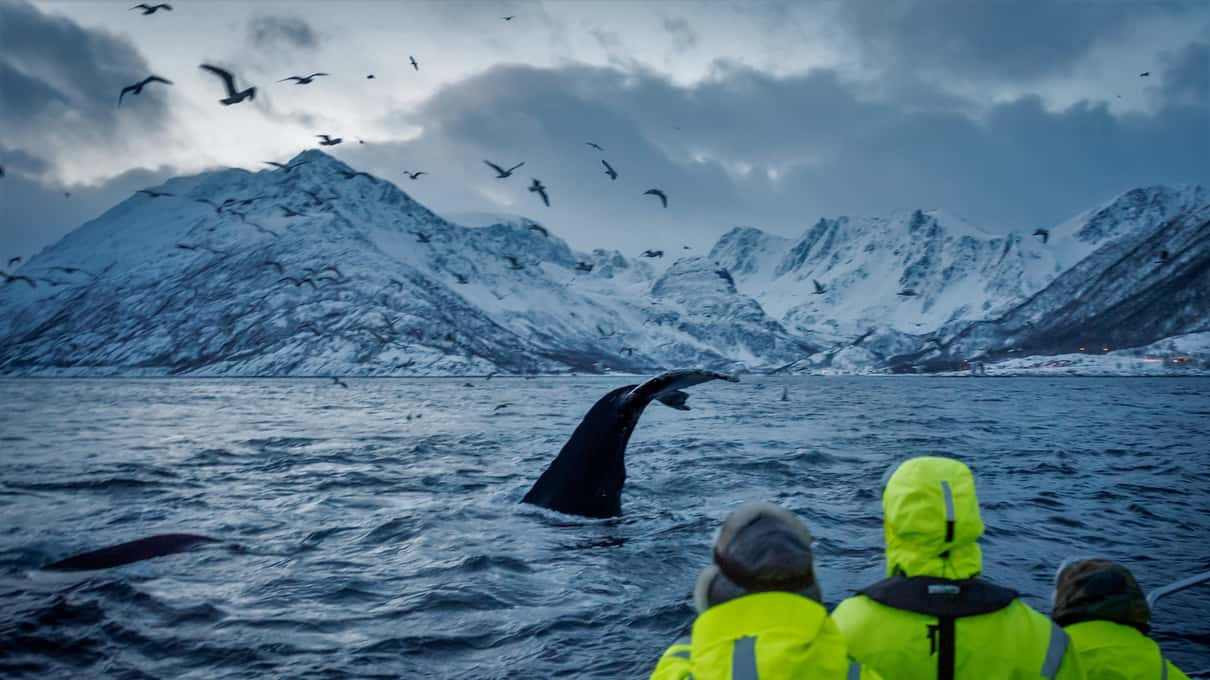
What each tour lends you
The kit on offer varies more than the prices do. Check the table before you pack, because it decides whether you need your own ski jacket on the boat.
| Tour | Clothing supplied | Shelter on board |
|---|---|---|
| finnmark moods, heated boat | None, dress warmly in layers | Heated indoor seating |
| Æventyr, small-group RIB | Thermal suit, life jacket, shoes, goggles, gloves | None, open boat |
| Alta Adventure, with pickup | Warm outdoor clothes to borrow at the office | Warm cabin |
On the RIB the suit goes over your own clothes, so you still want wool underneath. One reviewer got soaked and was lent dry socks afterward, a small kindness that tells you how wet an open boat can get.
Alta Adventure lets you borrow warm outer layers at its office before the drive, and you can leave your bags there. finnmark moods lends nothing, though its listing suggests layers plus water and small snacks. More on what the fares include is in our price comparison.
A thermal suit and goggles come with the fare
If you would rather not pack for an open sea, Æventyr's RIB from ~$284 includes a warm thermal suit with matching shoes and gloves, plus goggles. Groups stop at 12 and coffee and toddy are served. The time on the water is about an hour. Not for under-12s or pregnant guests.
Phones and cameras in the low light
Cold drains batteries fast. Carry your phone close to your body in an inside pocket, with a power bank in the same warm spot, and bring it out only for the shot.
On the RIB, spray reaches everything. A small dry bag or a zip bag protects a camera between sightings, and a lens cloth helps when salt dries on the glass.
Light is short and soft for much of the season, so photos get grainy. Knowing how the whales feed on the herring helps you guess where the next fin will appear. Accept a few blurry fins and spend some time simply watching.
Seasickness and small extras
If you get queasy on boats, take a seasickness tablet before you board rather than once you feel ill. A pharmacy in town can advise you. On the finnmark moods boat, the operator itself advises against booking if you are prone to seasickness.
Lip balm and a thin face cream help against wind burn. Hand warmers in your gloves or boots cost little and can rescue the second hour on deck.
A thermos of something hot is welcome on the trips that do not serve much. Tour 1 offers coffee and tea with biscuits, and the RIB serves coffee and toddy with snacks.
A short packing list
- Wool base layer for top and bottom
- Fleece or thick wool sweater
- Down or ski jacket plus a windproof shell
- Ski pants or insulated trousers
- Hat over the ears and a neck gaiter
- Thin gloves and thick mittens, with a spare pair
- Winter boots with grip and wool socks
- Power bank and a dry bag, plus seasickness tablets
Families with young children need a few more items, covered in our guide to whale watching with kids. If you have only a few hours ashore, our port day page helps you decide what to wear off the ship.