Why the whales come into the Altafjord
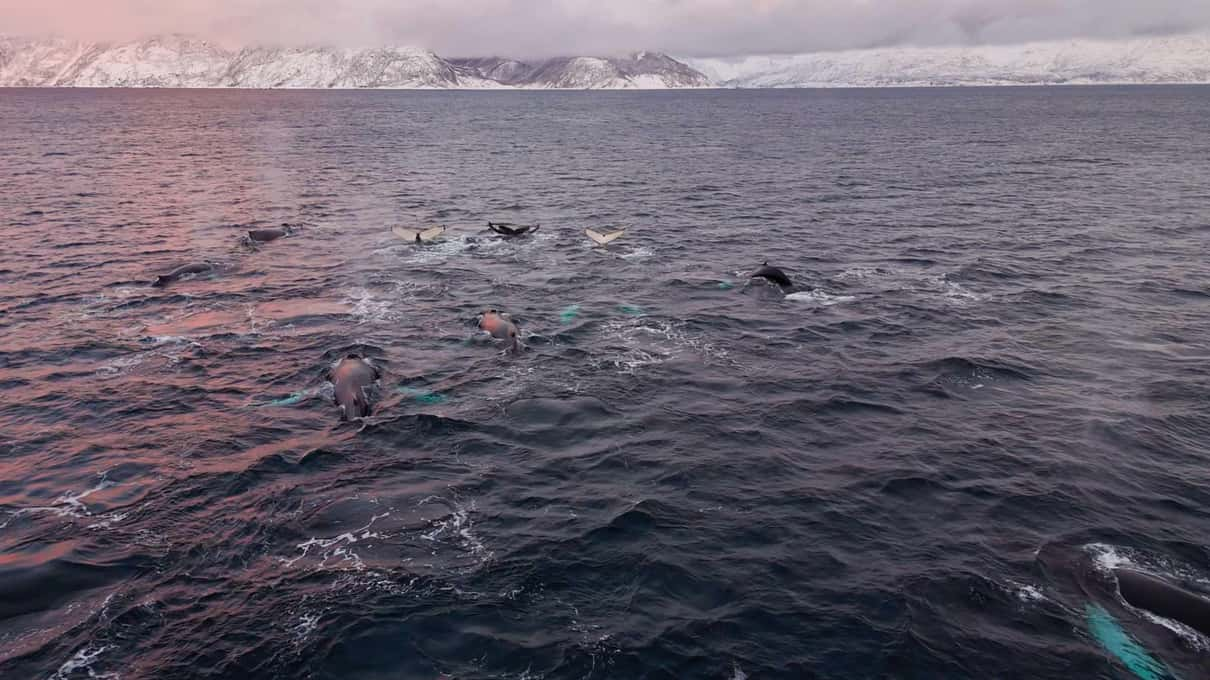
Orcas and humpbacks come into the Altafjord for one reason, the herring that spends the winter there. That food source sits close to the town of Alta, which keeps the boat trips short. It can also move, which is why no tour promises whales.
A fjord that runs from town to the sea
The Altafjord runs north from the town of Alta toward the open sea. Alta, the largest town in Finnmark, sits at its head. That puts it in Norway's northernmost county, about 380 km (235 miles) above the Arctic Circle.
Alta's inland climate is drier and colder than the outer coast's, but the fjord itself does not freeze. That open water, and the fish that crowd into it in winter, is why boats leave Alta to look for whales.
Follow the herring
The whales come for food. Norway's orcas follow the Norwegian spring-spawning herring, which spends the winter in northern fjords, and humpbacks feed on the same schools.
In recent winters large schools of herring have wintered in the Altafjord and the fjords nearby. The orcas and humpbacks have followed them in, and the tours from Alta grew up around that.
The herring moves between years, though. A few winters back the whales stayed mostly farther west near Skjervøy and Kvænangen, and they could shift again. That is why no operator here promises whales, and why you should not expect them on every trip.
Our guide to how orcas and humpbacks hunt the herring explains what the whales do once they find a school. The month-by-month guide covers when the fish are usually in.
Short distances are Alta's advantage
With the herring this close, the boats spend little time in transit. A whale trip from Alta lasts about 3.5 to 4.5 hours, with much less travel than a long day trip from Tromsø.
The boats go where the whales were last seen. Our pick, finnmark moods, sails from Havneveien 24 in Alta itself, so the search starts as soon as you leave the harbour.
Æventyr and Alta Adventure drive you to a harbour along the fjord first. On the RIB listing that drive takes about 25 minutes, and up to an hour when the whales are farther away. Cruise guests should read our port day guide before choosing one.
Out of Alta's harbour with no drive first
A heated cabin boat from Havneveien 24 for about 3.5 hours on the fjord. A toilet is aboard and hot drinks come with biscuits. Suitable for small children too.
Which boat goes where
finnmark moods' heated boat from ~$268 spends about 3.5 hours on the water, up to 4 on the itinerary, with indoor seats for the faster stretches. It is the only one of the three that starts at the harbour in town.
Æventyr's RIB from ~$284 meets at Markedsgata 6 and moves its start harbour to follow the whales. The cold keeps it to about an hour at sea once you are out there.
Alta Adventure from ~$279 begins with a briefing at its office on local history and why the whales come into the Altafjord. Then it takes you to a partner boat for about 3 hours on the water.
So the start point shapes the day more than the boat does. From the town harbour you are searching within minutes, while the other two spend part of the trip on the road along the fjord.
What else lives in the fjord
The orca (the black and white killer whale) and the humpback are the reason to go. Listings and reviews also mention fin whales, and quieter days can still show other life.
- Small, quick harbour porpoises at the surface
- Dolphins now and then
- Seals on the water or the rocks
- White-tailed eagles, which live along this coast all year
None of these is promised either. They do make a slow day on the water feel less empty, and the eagles are often easier to photograph than a fin.
Seabirds tell part of the story too. Gulls gathering low over one patch of water can mean herring near the surface, so keep an eye on them while the boat searches.
Low light over the water
The whale season falls in the dark months. Alta has the polar night from about late November to mid-January, when the sun stays below the horizon and a few hours of blue and pink twilight come around midday.
That light is soft and low. It is lovely for the mood but hard on photos of a moving fin. The evenings are long and dark, which is where the northern lights page comes in.
Rock carvings by the same water
The fjord drew people long before the whale boats. The rock carvings at Alta, thousands of prehistoric figures by the shore, are a UNESCO World Heritage Site and fill a spare half day well.
They make a good plan for the hours after a morning on the boat, or for a day when wind keeps the boats in harbour. Wear the same boots, since the paths by the shore can be icy in winter.
Planning a trip on the Altafjord
Whichever tour you pick, the whales decide the route on the day. Our guide to the boats weighs a heated cabin against an open RIB, and the price comparison sets the three fares side by side.
Book early in your stay so that a cancelled or empty trip leaves time for a second attempt. Our page on days without whales explains what each listing offers when the fjord stays quiet.
Dress for wind on the water rather than for the town, and pack seasickness tablets for a choppy day. Our clothing guide covers the layers.